
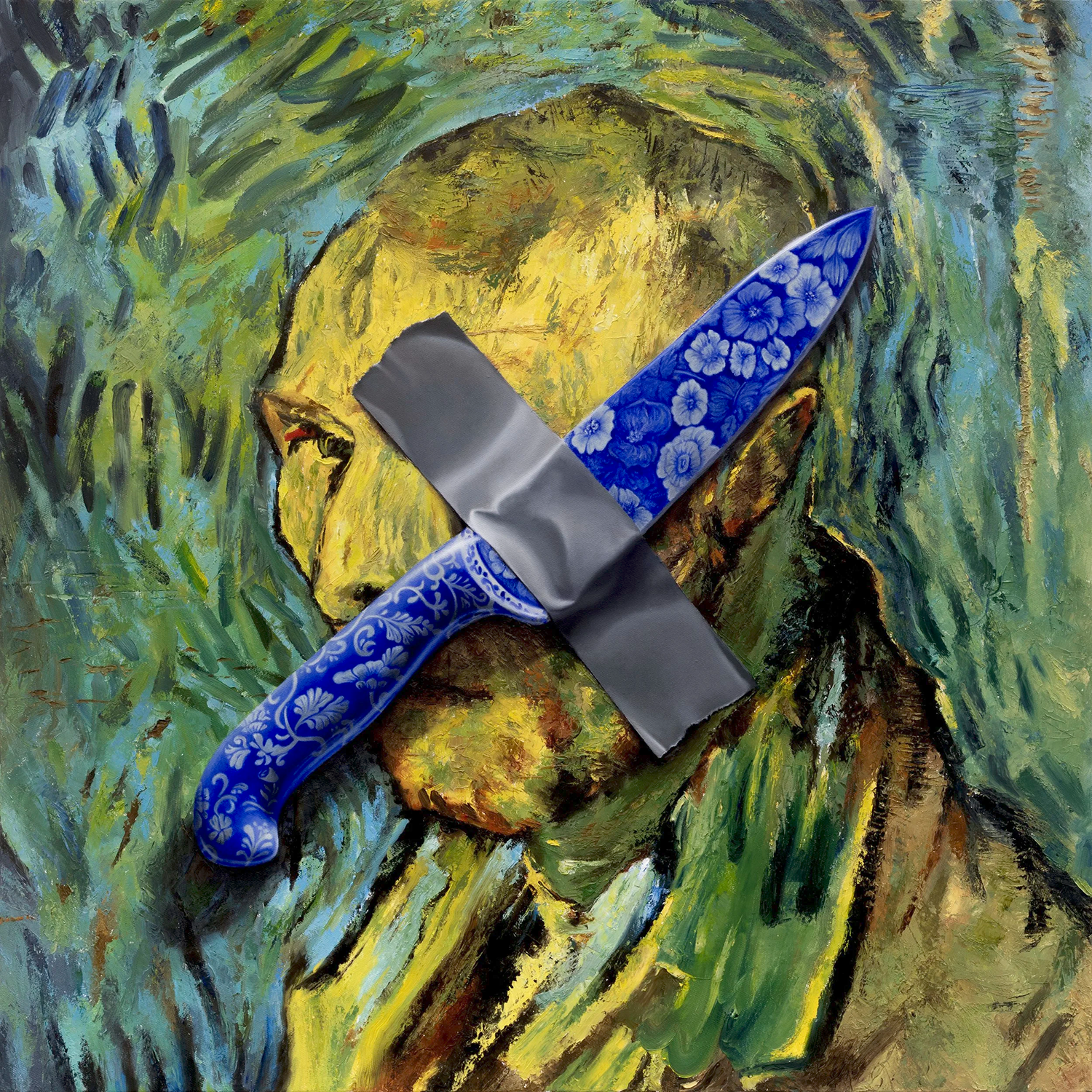
The deepest cut
2026, Oil on Italian Linen, 101.6 x 101.6cm
This work considers how an artist’s biography can become inseparable from the value and meaning of their work. A private and traumatic event, repeated through art history and popular culture, has become central to the mythology through which Van Gogh is understood and consumed. His personal history has become cultural property, his injury inseparable from his fame. Reproduced, aestheticised and absorbed into artistic lore, it helped define the enduring myth of the tortured artist.
The work considers the misplaced nostalgia through which suffering is softened by later fame. An unhappy and often painful life is retrospectively folded into a story of genius, while posthumous success lends tragedy a romance it never possessed. The intervention sits between homage and defacement, and the title shifts uneasily between injury and humour. A traumatic event becomes both art-historical reference and comedic device, raising a more uncomfortable question: what happens when biography itself becomes material for artistic exploitation?
Here value is not only reassigned through intervention, but also the exchange between artworks and the lived experience and mythology built around often tragic lives. As homage, defacement and cultural acquisition begin to overlap, and the boundary between reverence and exploitation becomes increasingly difficult to locate.